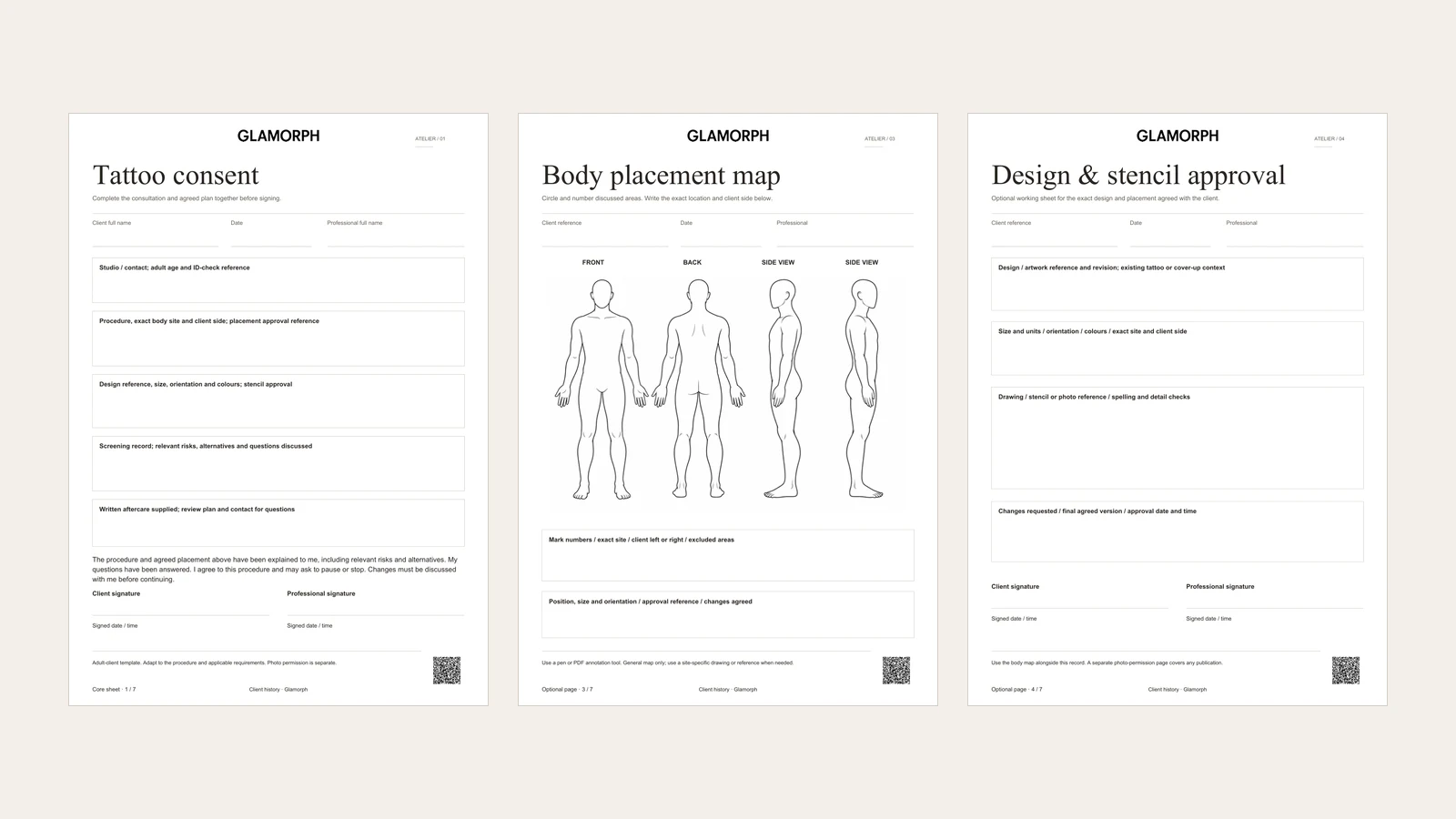
A tattoo appointment produces several different records: the client’s decision, the approved design and placement, what was used during the session, and what happened afterwards. This seven-page PDF pack keeps those decisions separate. Print or complete only the pages needed for that appointment.
Glamorph’s client documents can keep an existing PDF with the relevant client or session, alongside notes and photos. Adding this file does not automatically import its fields into app records. You can also prepare documents for in-person or remote signing through Glamorph’s document workflow, independently of online booking.
I am Konstantina Tsormpa, a makeup artist and Glamorph founder. This guide explains our recordkeeping template, informed by published tattoo-industry guidance. It does not claim tattooing experience or provide a jurisdiction-specific legal form.
Download the tattoo pack
7 pages · A4 · 70 text fields and 4 photo-permission checkboxes
Choose the pages that fit the session
| Page | What it records |
|---|---|
| 1. Consent | The procedure, site, agreed design, discussion, aftercare reference and signatures |
| 2. Consultation | Relevant disclosures, suitability discussion, questions and the decision to proceed, adapt or postpone |
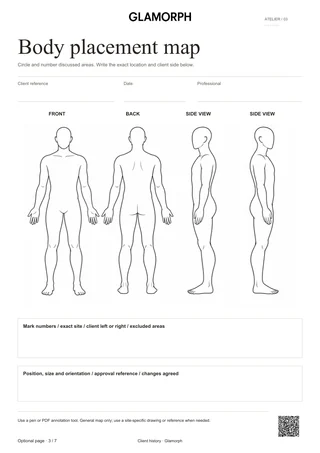
| 3. Body map | Numbered areas, exact client side, exclusions and positioning notes |
| 4. Design and stencil approval | Artwork revision, dimensions, orientation, colours, changes and approval |
| 5. Procedure and materials | Actual work, ink manufacturer and batch, sterile-item references and observations |
| 6. Aftercare and follow-up | Advice supplied, questions, review findings and the next-session plan |
| 7. Photo permission | Separate, specific choices about the images and their permitted uses |
Keep the original blank. If an existing consultation record already contains the relevant information, reference it rather than copying it again. For a multi-session piece, use a fresh procedure page for each visit so the materials and observations remain dated.
Make the placement unambiguous
Circle and number the discussed area on the body map, then write the exact location and the client’s left or right. The drawing is a reference surface, not a measurement tool. Record size and units separately and link the final stencil or artwork revision. A circle on a generic body outline cannot capture the approved spelling, orientation or detail of a design.
For a cover-up, identify the existing tattoo and the agreed revision in the design page. If the plan changes, record the change and the client’s agreement before continuing. Do not silently replace the previous approval record.
Keep consent, procedure notes and publicity separate
The UKHSA-linked tattooing and piercing toolkit includes consent and aftercare documentation as distinct parts of recordkeeping. Derby City Council’s tattooing guidance also identifies design and body-area details. These are useful workflow references. Local requirements still determine what your studio must collect and retain.
Complete the actual risk discussion and aftercare reference before signing. The blank pack is for adult clients and is not a substitute for the wording and checks required by your licensing authority or insurer.
The photo page starts with every box unchecked. Identify the images, permitted channels, restrictions, use period and withdrawal contact. Procedure consent does not grant permission to publish a photograph.
Fill, sign and keep the record
Type into the text fields using a compatible PDF reader. Use a pen or PDF annotation tool to mark the body map. Signature spaces are for handwriting or a reader’s signing tool. They are not certificate-signature fields. Save a separate completed copy and reopen it to check the text and selected photo choices.
The PDF does not send client information to this website. Store completed copies with appropriate access controls. In Glamorph for tattoo artists, create the client and dated session, attach the completed document, then add the session notes and relevant photos. That keeps the approved plan and the work performed together in the client history.
Written by
Professional makeup artist and founder of Glamorph
Makeup artist and Glamorph founder with 5+ years of experience. Working closely with professionals across the beauty industry, she writes about client management, booking and everyday salon workflows.